Category Archives: Final Thoughts

Weather vs. Callan

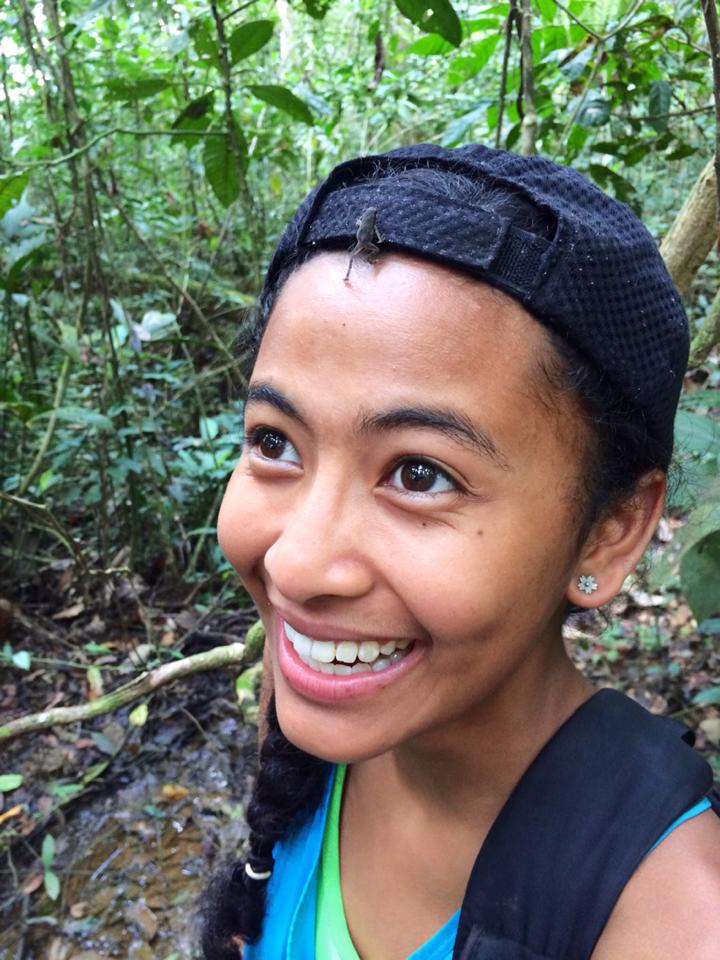
Callan studies the behavior of a frog on her head

Hot. Wet. Sweat.
Dripping down with each incline.
From merely breathing.
From merely moving.
From merely being still.

In retrospect, the climate never really crossed my mind before coming to Nicaragua, however big it may have influenced my daily schedule in the rainforest. Yes, I did not believe the weather would remain at a constant fixture (because it is the Neotropics); but, the impact of an ever-changing environment was not evident until data collection was crucial.

I remember waking up around 2:30 am to the heavy pitter patter of rain on the metal roof and thinking, “The rain will stop around 5:30 am; enough time for our dragonflies to readjust to their habitat.” But the rain did not stop. It did not stop for three days. What was even more frustrating was that we could not collect data for our water quality project since the usually clear water was too murky and full of soot to count animal abundance.

Eventually, the rain did stop. But my partner and I were on hyper drive, anxious to recover the bits of data we failed to collect. So we became more flexible with our schedule in order to complete more dragonfly trials.

The humidity…now that was something else entirely. You could walk for less than 2 minutes and feel as if you jumped head first into a river. Once or twice I would joke and dramatically tell Vivien to “go on without me” as I wiped the sweat from my face whenever we started hiking up a trail.

But the humidity did not affect me until stress affected me. Until I worried about making a mistake. Until I feared that I was not respected. Until I felt somewhat homesick. Until I wanted to know how my mom, dad, and brother’s day went. Until I questioned my life goals.

So I would close my eyes when I was in the rainforest and breathe in deeply. Taking in the sounds and smells, remembering that this is exactly where I want to be. Where I am destined to be. Working. Right. Here.

There will be high stress events involved in science. It is just how you adapt to those situations that either make or break you. I believe Vivien and I were capable of handling ourselves well when the weather was not optimal. I even believe Vivien and I were very compatible partners, so I am grateful for that. This experience will definitely be one I will not forget. It will always be the first of many: research projects, rare animal sightings (!!!), and true independent range on what scientifically interested me.

On the last day, my friend Brigit and I walked the length of the Rio Gaitan. This was perhaps my most favorite memory. I have never seen such untouched beauty and peace. It looked like a dream. And when I felt the humidity and the sweat, I welcomed it with open arms for I was saying goodbye to an old friend.

Back to Reality

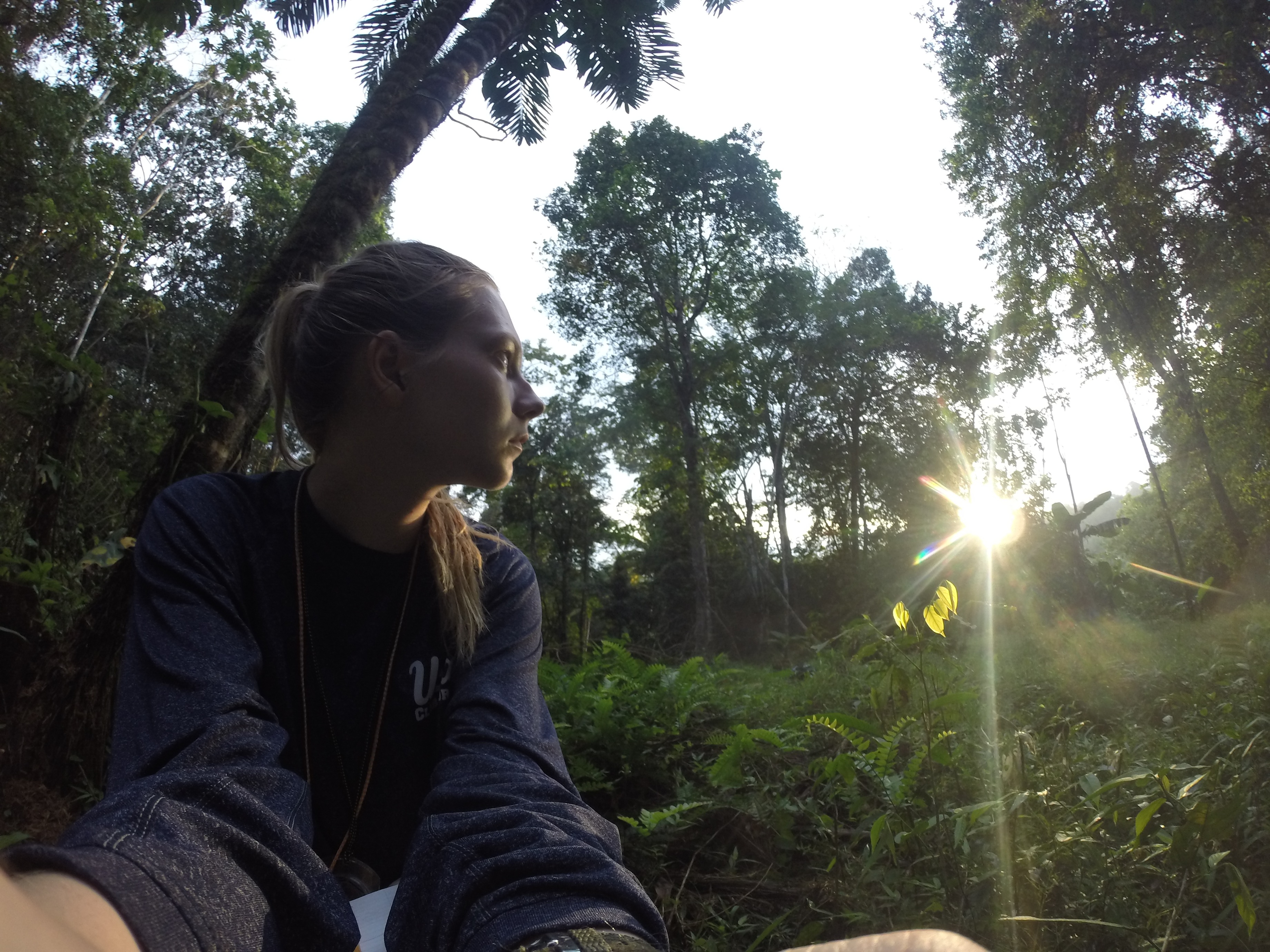
Emily's gopro group shot
Emily’s gopro group shot

Being back home has definitely made me reflect about my time in Nicaragua. I feel that we were so busy while we were there that there was really no time to just sit down and take a breather. I think my one outlet of letting everything spill about how I was feeling or what happened that day was writing in my journal every night. I have been reading some of the entries I wrote while I was there and it felt like I was going way back in time years ago when it was really just about a week ago.  Also, I’m so happy that I was able to bring a GoPro to Nicaragua (quick shout out to Victoria for being the kindest best friend and letting me borrow it!). Last night, I finally downloaded all the videos and pictures and I was having so much fun being able to replay some of those memories. It was also very heartwarming to see how much we evolved as a group. In the first video you see how everyone is still getting comfortable with each other, politely waving at the camera. On the last video, people are jumping across the camera, making the silliest of faces, singing, laughing, hugging, and taking pictures with one another. I’m glad I was able to meet such a great group of people.

I think the biggest thing about being back has been seeing how it’s the little things that matter. For example, for the whole time we were there it was always cold showers. The first hot shower I took at home honestly felt like heaven. Being able to use conditioner and actually be able to brush my hair was amazing. Having a laundry machine that thoroughly washes your clothes is such a privilege. I’m so happy that I am now able to value these things more. I think trips like these are important because sometimes we get so caught up living in such a fast-paced society that we forget to cherish the little things.

In whole, this trip was far from what I expected it to be. When they say you do field work every day, they literally mean every day. What are weekends? When they say you really get to know the 15 other students, they are not lying. When they say you will get frustrated with your project, it’s definitely true. And when they say this experience will be one of the highlights of your undergrad career, there couldn’t be a truer statement.

Memories of the Rain Forest


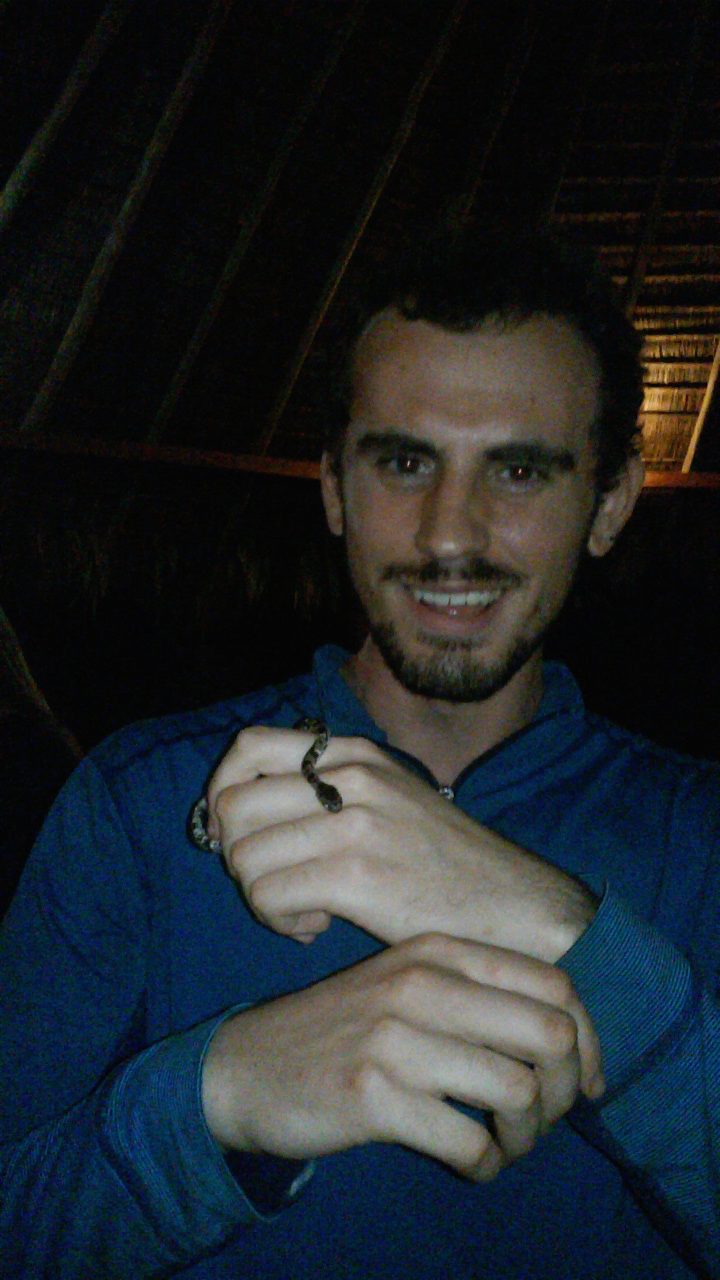
Jeff holding a Cloudy Slugeater snake

A week has passed since arriving back in Los Angeles, and my time in the rainforest is nothing more than a memory (one that is constantly reinforced by the analysis of the data we have collected). Since the time I have been back, I have recited my elevator pitch to almost everyone I have spoken to, including during an interview for a graduate school program. I am consistently asked how my time in Nicaragua was, and the most appropriate answer I can think of is “amazing”.

I had so many expectations going into the trip. It was my first time outside of the United States, so I was expecting to be essentially placed into a whole new world. In some cases it did feel like I was in an entirely unfamiliar place, especially during the night hike we took during our first night in Refugio Bartola. It was honestly a little overwhelming in the beginning, but as time progressed, I soon became adjusted to my surroundings. My childhood dream of traveling to the rainforest, something I had long given up on, was realized.

Like I mentioned in my previous blog post, one of the things I did not anticipate fully was the amount of hard work we would be doing. I was so used to the classroom setting that I did not consider that hiking miles through the rainforest is also a very valid teaching tool. That’s not to say that I did not expect to be working hard at all. I was fully prepared for what was thrown at me.

What made this trip so amazing is that I was able to devote my entire being to the experience. Without the distraction of cell phones and computers, there was no excuse not to take an opportunity to see something cool, such as a sloth or a cool insect that was brought back into camp. I knew that I would see a large variety of wildlife, but knowing you would see something and actually seeing it are two very different things. Looking back at my photos, I realize that nothing will ever be as good as actually being there. The excitement of seeing an animal in its natural habitat is something that will always stick with me.

In the future, if I am given the opportunity to travel to a rainforest setting (or anywhere else, to be honest), I would gladly say yes. This first traveling experience showed me that I really do love nature and that I want to experience more of it.

Immense Pride, Satisfaction, and Gratitude

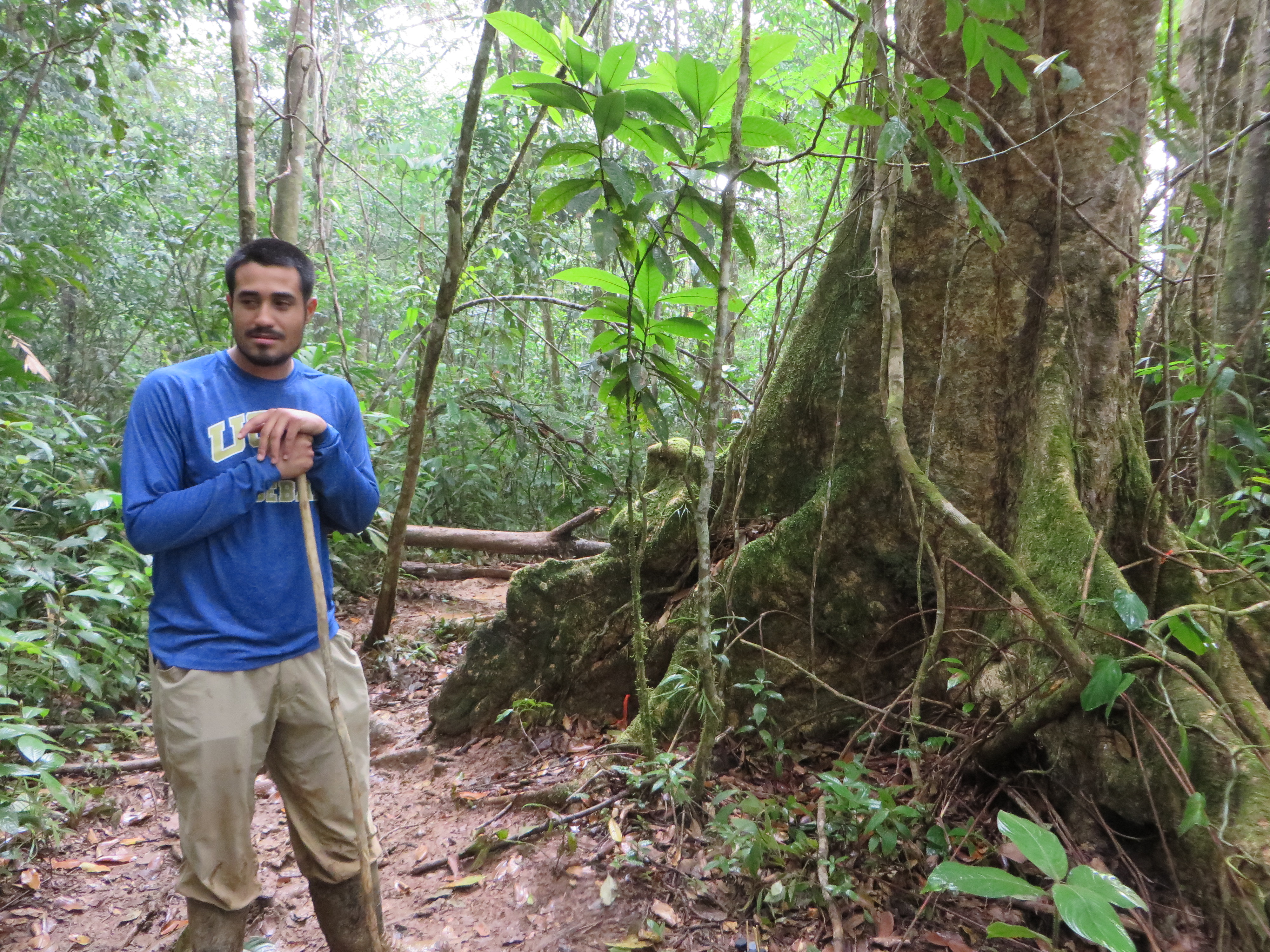
Juan
Juan with a buttress tree

As I now sit in my desk at home, I reflect back on the experience that I had while participating in the Field Biology Quarter (FBQ) in Nicaragua. It was all a great learning experience that I would not change anything about. I am extremely proud of myself for going through with something that was completely unknown to me and for persevering during those times when things became difficult. There were two things that I found to be the most difficult during this FBQ. The first being having to come up with a question, a project idea, and proper methodology to answer the question we worked so hard to ask. This process was one that definitely caught me by surprise. I was not expecting it to be as difficult as it was and it was probably the most eye opening part of this FBQ. The second was the distance. Being apart from friends and family with no form of communication was difficult. Although there were times when I appreciated the time alone, I learned to not take for granted the company of the people you care and love. These difficult moments were also my favorite moments because they allowed me to view things differently and they provided me with a new perspective.

From this FBQ, I had hoped to participate in an experience that would show me exactly what field research would be like and every small detail that went along with it. I feel as though this program met all of my expectations and provided me with a realistic experience of what being a field biologist entails. It will allow me to better make decisions about the potential career(s) I would like to pursue. It has also provided me with a stronger foundation and renewed mindset of what I truly find interesting and what I can see myself doing for the rest of my life. I am still undecided, but I am confident that this experience will play a significant role in my decision making process. I truly do appreciate having been given the opportunity to participate in the 2015 Field Biology Quarter in Nicaragua and I would like to express my sincerest gratitude to Dr. Greg Grether, Dr. Debra Shier, Rachel Chock, and Adrea Gonzalez-Karlsson for their guidance and immense support throughout this learning process.

Food for Thought

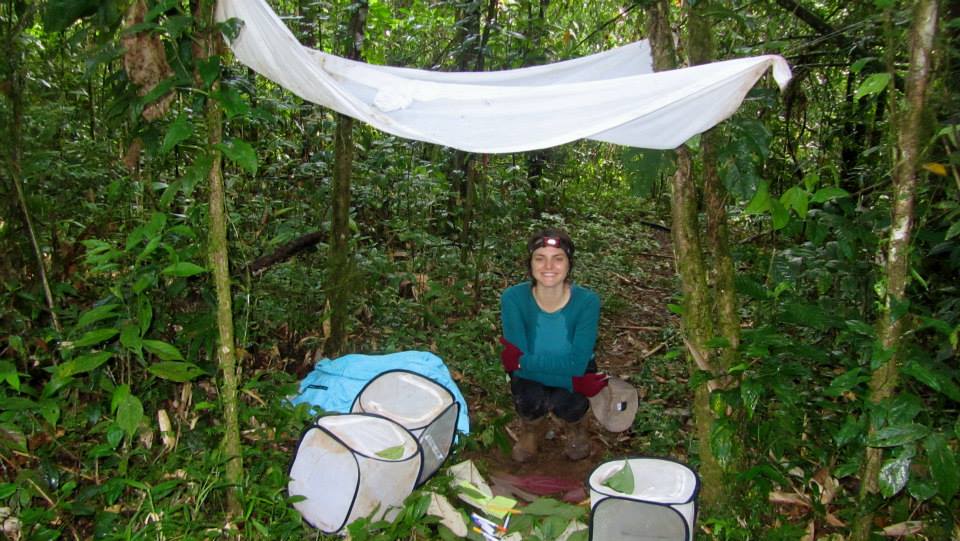
Vivien in the dragonfly field

Being back at UCLA feels different. Again, there’s that word I keep using. Different. Now that I have experienced what it is actually like to work in the field conducting my own research, it’s going to be difficult to go back to a regular class schedule in the Spring. A regular class schedule with discussions and midterms. With multiple-choice tests. With three-hundred other students.

Being home and sleeping without the need of a mosquito net and not having our clothes covered in crusted mud, is a luxury I think I have not appreciated as much as I should. I think everyone needs an eye-opening experience to realize there are many things that we have, which we sometimes take for granted.

I think this experience has truly allowed me to grow as a person. To appreciate the small things. To overcome obstacles quickly and efficiently. To enjoy every sunny moment, because literally they can be gone within seconds, especially in the rainforest. Lessons I will take with me through all other journeys life will lie out before me.

Through this entire experience, I have realized that if I pursue a research career, I would want to conduct field research. I loved experiencing what it is like to catch dragonflies and sit in a meadow, painting them individually. The excitement you feel when you see that a marked dragonfly returns to your site is almost indescribable. Especially when said dragonfly returns for more than one day. I liked standing in streams, the waves almost entering my boots, while trying to catch multiple sizes of fish that inhabit the stream. I liked trekking through the rainforest finding new streams to analyze for our water project. Finding new species we hadn’t noticed before (especially the water scorpion. That one was by far my favorite). I am actually enjoying writing about my research and being able to determine if what we found is actually significant. Of course, data is data, regardless of statistical significance or not.

As I said originally, my personal goal by participating in this FBQ pertained to me looking for a revelation. An “Ah-ha” moment indicating things falling into place at exactly the right moment. Indicating that I know what I want to do for the rest of my life. I don’t know if three weeks was enough time to permanently stamp my future into stone. However the small taste of this type of research I did experience, I can honestly say was quite addicting. Hopefully I will be able to return to Central America soon. It most definitely is a place I would like to visit again. Maybe the next time I venture there, I will be conducting my own research project pertaining to my PhD.

Last Thoughts

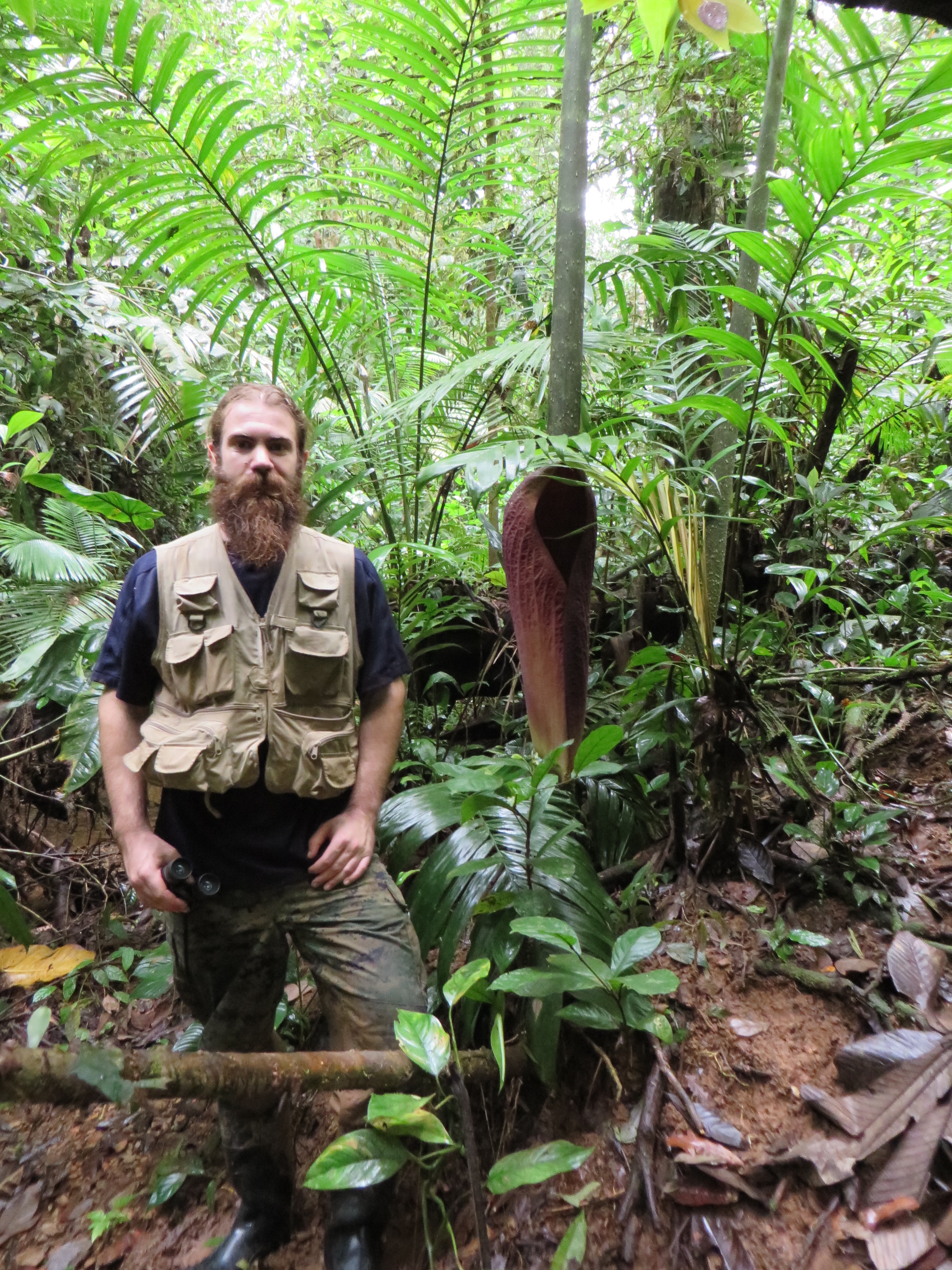
Caleb
Caleb with the giant flower of Dracontium gigas

As I find myself again in the proverbial armchair, which disappointingly happens to have no armrests, I’m curious: did my experience change my perspective on biology, or on science more generally? How did my first time out there in the field make me think differently?

First and foremost, I’ve come to realize how hard it really is to get things done when you’re out there – especially when you’re not well equipped with a background on your study system or on how to attack your problems in a methodological sense. However, I think that was part of the fun of this trip – knowing absolutely nothing, figuring out a way to figure it out without an extensive literature on the subject, and coming away with some new knowledge (even if it was less than we’d hoped). The limitations we had – for example, exhausting all our possible methods for marking flies, only to find out that they’re all lethal or a good method for turning craneflies into spider food, or finding out that your camera traps aren’t keeping proper time after being out at the sites for days – gave some excellent perspective on the challenges faced by all the researchers whose work I read – challenges that you never see in the final product. It’s easy to try to poke holes in someone’s work without seeing how it may be a triumph against many great odds. Although criticism is obviously part of the dialectical process of science and difficulty is not an excuse for poor work, this experience gave me another perspective that I may have been lacking – to appreciate of the ingenuity and simple elegance of many experiments, rather than just look for flaws as a knee-jerk reaction.

Secondly, it’s really fun to figure out new things. While out there in the field, I often reminisced on Richard Feynman’s “The Pleasure of Finding Things Out,” especially with the things that not much was known about, such as cranefly behavior. There was definitely a new joy I hadn’t felt before – that of having my speculation be bounded by experiment and observation. This, I think, was one of the most well-met expectations for this FBQ. I spent a lot of time simply observing and coming up with ideas, as I have often done before, but it was fascinating to then have to turn around wonder – well how should I test that? What further quantitative observations should I make? Although time constraints, and to some extent poor planning, kept us from really getting at many of our questions, this was just further motivation for me to improve my research skills (a favorite quote of mine is “the first step to being good at something is to really suck at it”) and also made me want my own questions – the ones that I can spend years on in that iterative process of speculation then experimentation.

Always Learning

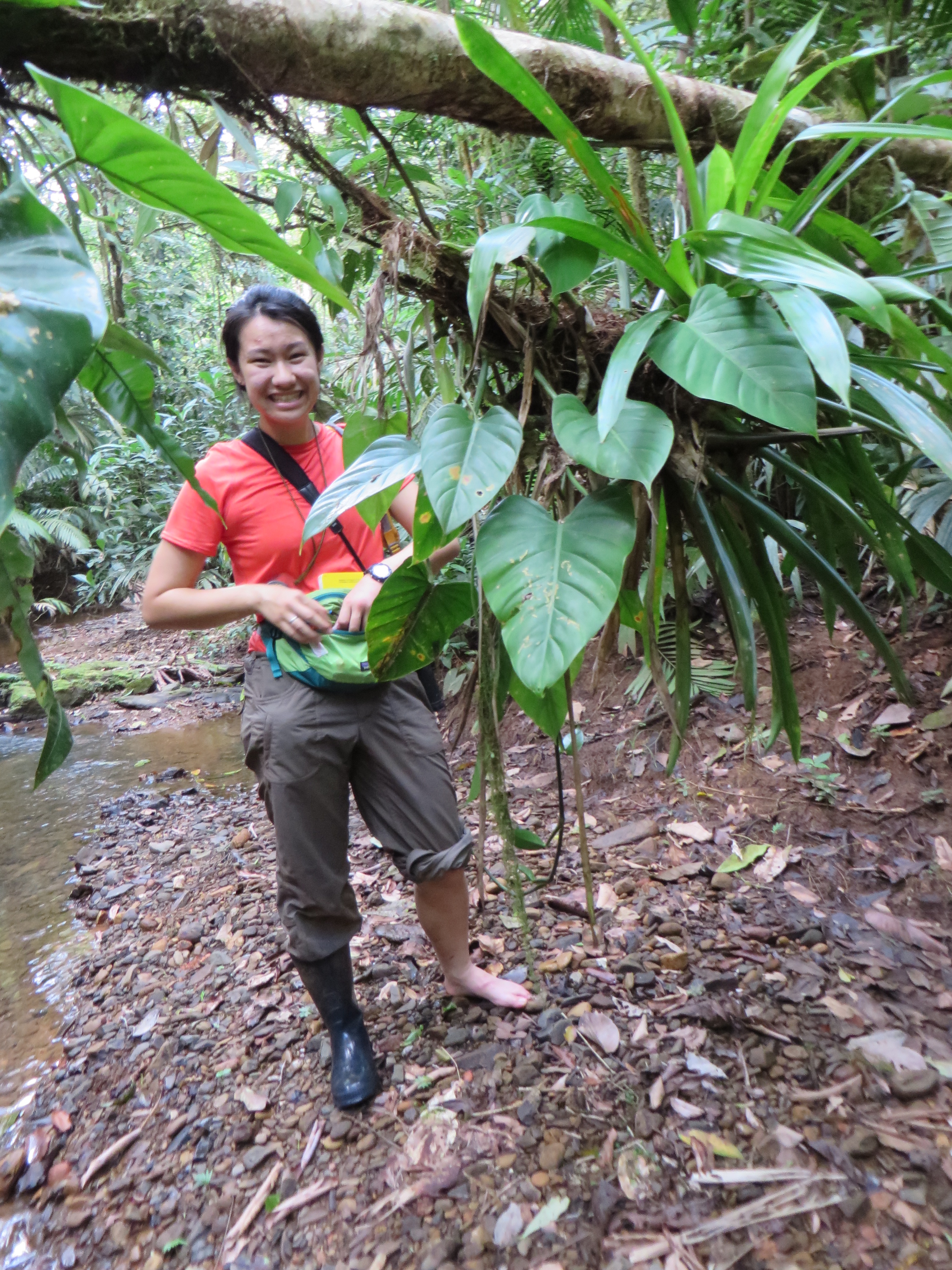
Michelle with one boot and a bromeliad

We have now been out of the rainforest for one week. Some mornings I still wake up expecting to roll out of my mosquito net, ready for another day on the trails. When I realize that I’m back in LA, part of me rejoices in the lack of humidity and the plethora of dry, cotton clothing. The larger part of me regrets the absence of beautiful and vibrant green. As I reflect on my time in Nicaragua, I am in awe of my good fortune. The beauty of the tropical rainforest will forever be imprinted on my memory and I am endlessly grateful for this opportunity.

In my first blog post, my goal was to learn something new every day during my time in Nicaragua. I can say with absolute confidence that there was not a day that I didn’t learn factoids about a new, fascinating organism, the name and use of a new food, personality quirks about a new friend, or a better technique for headstands. While this goal was easy enough to accomplish, my main motivation in its creation was to remain humble and to remind myself to be present in this amazing experience. This overall goal was harder to achieve than I expected. There were times throughout the trip that I let myself get wrapped up in my own head and stresses. Sometimes things felt out of my control. In those moments, I wish that I had slowed my pace and allowed myself time to absorb my surroundings.

Going into this field experience, I didn’t really know what to expect. Sure, there are things that I wish I could have done or approached differently, but this experience definitely taught me to roll with the punches. More than anything, this experience further showed me my passion for the outdoors and studying the organisms around me. I fell in love with moments when I was observing the behaviors of a little insect, finding an organism that I had never seen before, or walking into the forest with my measurement tools on my fanny pack. With the information I was able to glean from the organisms we studied, I was warmed by the small sense of familiarity I began to feel with the whole community. The feeling of learning something new and discovering something beautiful in the ecosystem around me – no matter the relative size or importance – is a high I will gladly chase for the rest of my life.

Love, hugs, and thanks for listening!

Michelle

Concrete Jungle

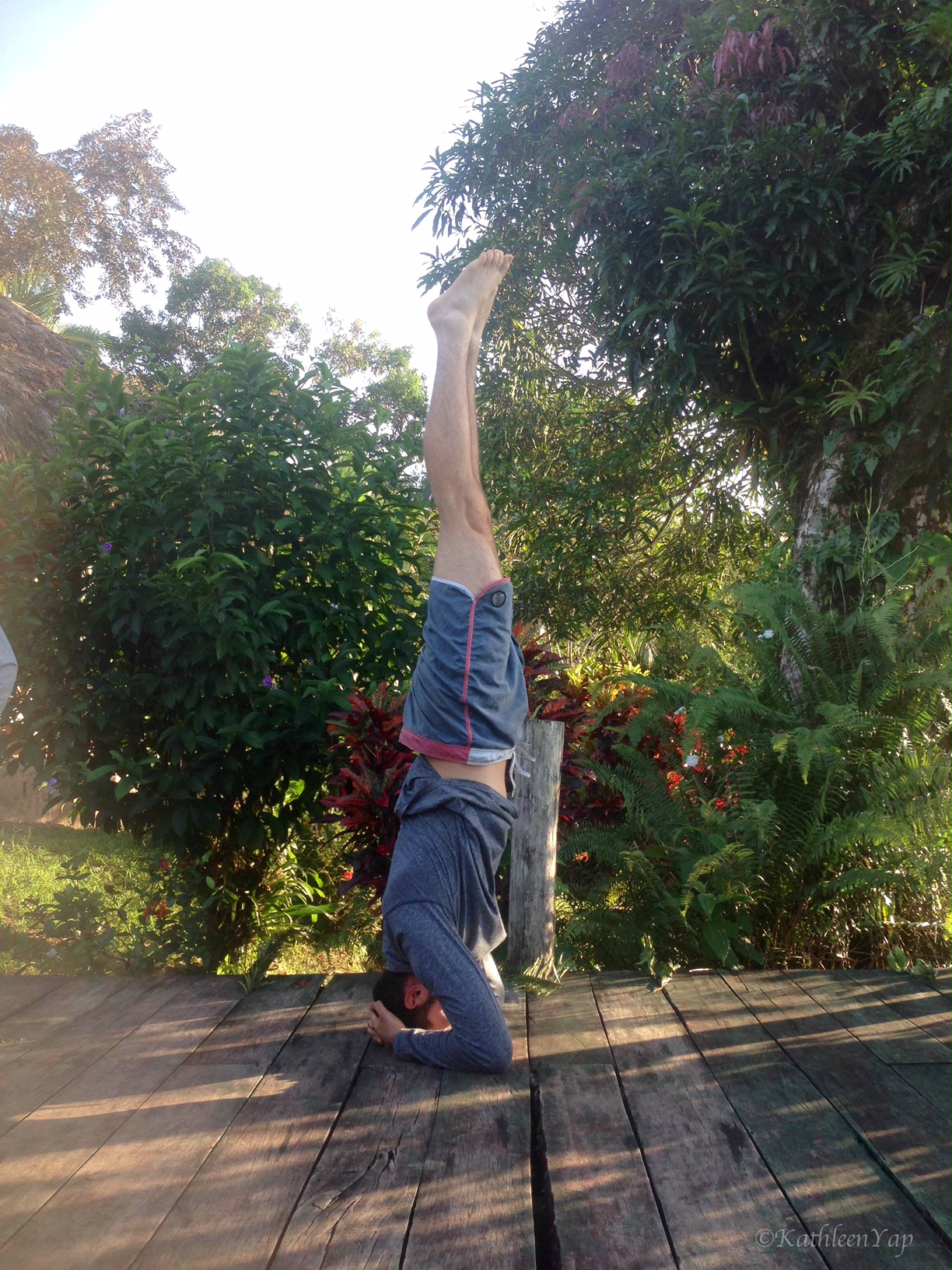
Ben practices a headstand at Refugio Bartola

As I transition back home to Los Angeles and UCLA I’m already missing Refugio Bartola. Waking up each morning to a serene Rio San Juan, a flock of birds singing, fresh squeezed juices, and a day of data collection in the rainforest. Overall, the trip exceeded my previous expectations and changed my outlook on field biology. As someone who has past experience in a wet lab environment, the necessity to constantly readjust my field experiments (because a lack of an item) was new to me and difficult. Challenges of not having a heat lamp readily available, for example, really made us think out of the box, literally. To address the confounding variable of not being able to control for temperature we instead performed our behavior trials at the same time each day and in the shade.

While in Nicaragua what surprised me the most was how people, myself included, handled the stress surrounding their projects and various situations. Being able to push through during the middle of the trip and wake up for early 5am hikes days on end was exhausting both mentally and physically. But, like most challenges in life it is how you respond that determines your eventual success and even happiness (both during the trip and after in my opinion). I personally like experiencing moments of exhaustion like the middle of the trip because it makes me realize what I’m truly capable of. For me especially I handled the stress by always trying to stay positive and keeping my day balanced (literally and figuratively!)­­––by sleeping enough, allocating time to work out and socialize with my peers.

The rainforest is an incredible, almost magical place that I will never forget. I can’t overstate how grateful I am for the FBQ and my eye opening experience. By far my favorite moment was hiking up to the end of one of the trails to a creek, then trekking through the water for another kilometer or so. Under tree falls and over waterfalls, with Blue Morpho butterflies flying around everywhere I turned, it was unreal and adrenaline inducing.

And then the Rain

Kaylee
Kaylee marking harvestmen in the rain

When I started out the quarter I was hoping to gain some clarity on what it is I want to pursue in my career. I think the realization hit me when I was sitting on the forest floor, in the pouring rain, marking harvestmen with paint pens. Fieldwork is hard. Very hard. I think in an ideal world I would like to have a career where fieldwork comes into play during some aspects of the job, but not all. The FBQ was so much more challenging than I could ever have imagined. When you are thinking about how to carry out two projects you have these neat little ideas about how to do so. Once you try to take the ideas you have and apply them to real life you get some problems. For example, we decided our project required marking harvestmen for identification, so we got our paint pens ready and went out to mark them. Little did we know that when harvestmen are startled they secrete a liquid onto their abdomens. Trying to make a precise dot on a wet surface does not work out too well. The paint spread all over the harvestmen’s bodies, causing some fatalities. With some critical thinking we came up with a solution. The next day we went out with Q-tips to dry off their little bodies before we marked them—which succeeded. So there we were, in the forest Q-tipping harvestmen so we could paint pen tiny dots on their tiny bodies. Almost everything we originally thought would work for collecting data had to be tweaked and refined.

And then the rain. It rained for several days straight near the end of the trip when it was crunch time to collect data. I think one of the hardest parts about the trip was pushing yourself to get up, get on your gear, and go into the rainforest regardless of the weather. And of course you had your poncho on, but somehow you couldn’t escape getting drenched. But this was also one of my favorite things about the rainforest. You would be hiking along, sweating, exhausted, and suddenly it would start pouring. During these moments the rain was welcomed and seemed to cleanse you of all of your frustration. Overall, the FBQ was an experience I needed to have in order to appreciate what science is all about.

One Slice of Pizza, One Slice of Hard Facts

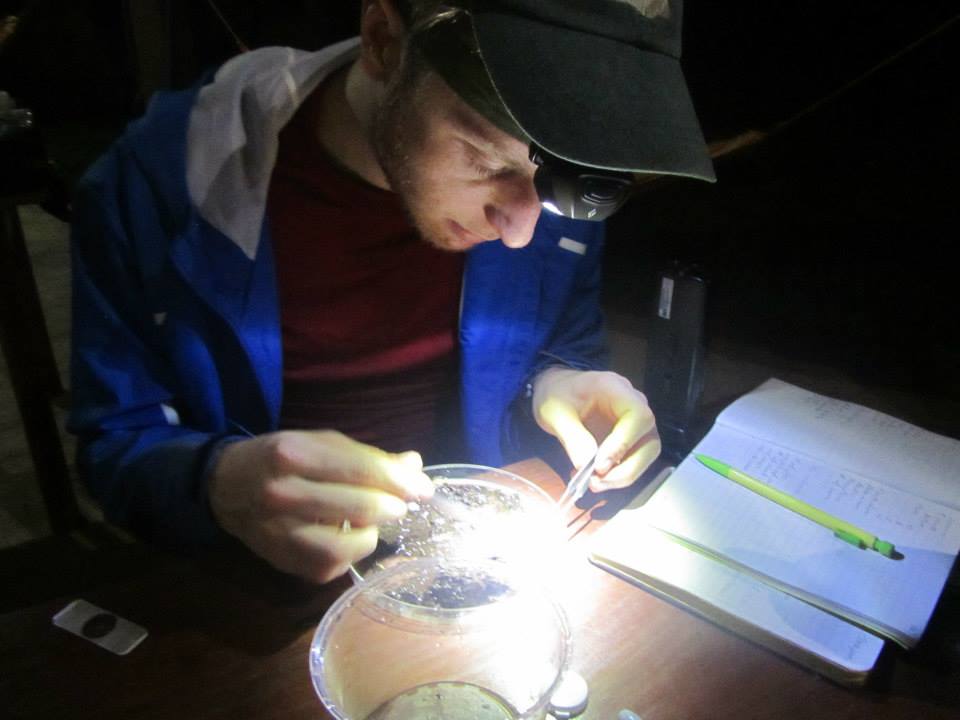
Joey sorting through bromeliad contents in the evening

It seems strange writing from the comfort of my bed in the land of warm showers and delivery pizza. While the change of scenery has its amenities, I did not anticipate an almost immediate sense of nostalgia. I miss Nicaragua. I miss being able to call a tropical rainforest my backyard. I even miss my muddy clothes; they told the story of my day, of a tumble at the difficult canyon ascent on the orange trail or a crawl in the leaf litter after some unknown insect.

I began my journey with a search for answers. While I may have romanticized the novel scientific question, I did come back with some exciting discoveries. I can now say that I speak fluent bromeliad. What I mean to say is that after three weeks of sifting through the innards of these plants I have an understanding of the complexity of my biological system. It is profound how integral bromeliads are in many different trophic levels; capuchins eat them, geckos hunt in them, rodents defecate in them, and much, much more.   I’ve also come back knowing a lot more about myself. I am confident that the life of a field biologist is something that I could become quite accustomed to. To stand at the precipice of discovery (and hopefully cross it) with your feet planted in the wild earth is incomparable in my opinion. I also learned a lot from my colleagues and my friends. They challenged me to try new foods (I already miss miel de chayote), to improvise with the materials I had in front of me rather than what I had left behind (cut to Tinh’s ant arena, or Tinh’s tethered bullet ant, or Tinh’s pseudo-bird cutout), to appreciate the small things about my day that I would have otherwise overlooked.

It wouldn’t be a stretch to say that this was one of the most incredible things I have ever done. My first time outside of the country also became my first time sitting at the mouth of a cave during dusk bat emergence, my first time pulling a coconut from the top of a palm, my first time having to dodge monkey projectiles, and so it goes.  Some of my favorite moments of the trip were the smallest things. I’ll never forget being stranded under the trunk of a large tree when the large storms hit, or racing back down the Río San Juan in order to beat the setting sun, or even the indescribable call of the Montezuma’s Oropendola—underwater slot machines? While it’s sad leaving, being back at home means I have more questions to explore. Namely, will all of the hard work that I put into data collection yield anything extraordinary?

Until Next Time,

Joseph Nikko Curti